
The short answer
- Visa free stay
- 30 days (from 15 Sept 2026)
- Longer stays
- 60 day tourist e-Visa
- Arrival card
- TDAC, free, within 3 days before
- Tourist fee
- Proposed, not charged yet
What's changed recentlyShow
- 15 Sept 2026Visa free stays cut from 60 to 30 days for about 60 countries, for tourism only; 21 nationalities now need a visa; land border entries on the exemption limited to two a calendar year.
- 17 Aug 2026Government update describes a proposed 450 baht tourism fee, replacing the earlier 300 baht idea. No collection date set.
- 1 May 2025The Thailand Digital Arrival Card (TDAC) replaced the paper arrival card for all foreign visitors.
Thailand changed its entry rules on 15 September 2026, and many websites still describe the old 60 day visa free stay. Here's what applies now, checked in November 2026. Always confirm with the Thai embassy for your passport, as rules can change at short notice.
The rules at a glance
| What applies from 15 September 2026 | |
|---|---|
| Visa free stay | 30 days for about 60 countries, including Australia, the UK, the US, Canada, most of Europe, Japan and India; tourism only |
| Extending | Once, by up to 30 days, at an immigration office in Thailand |
| Longer trips | A 60 day tourist e-Visa (TR), applied for online before you travel, extendable by 30 days |
| Arrival card | The TDAC, online, free, within 3 days before arrival |
| Land borders | Entries on the visa exemption limited to two per calendar year (some ASEAN nationals exempt) |
| Now need a visa | 21 nationalities, including Mexico, Colombia, Morocco and Sri Lanka |
| Tourist fee | Proposed (450 baht), not charged yet |
Bilateral agreements continue separately, for example 90 days for Brazil and South Korea and 30 days for China.
The Thailand Digital Arrival Card (TDAC)
- Who: Every foreign visitor arriving by air, land or sea, including children.
- When: Within the 3 days before you arrive.
- Cost: Free on the official Thai immigration website. Thai immigration has warned that many travellers paid fake sites that look official: if a site charges, it isn't the real one.
- What you need: Passport details, flight or travel details, and where you're staying on your first night.
Tip: Fill in the TDAC on the official immigration site only, and keep the confirmation on your phone for check in and immigration.
What 30 days means for your trip
For most holidays, 30 days is plenty. If you're planning a longer trip, for example a month in Thailand plus time in Vietnam or Laos, either apply for the 60 day e-Visa before you go, or plan an extension in Thailand. Don't plan on 'border runs': the land borders with Cambodia have been closed to tourists since June 2025, and land entries on the exemption are now limited.
Overstays and other rules
- Overstaying: Fines are charged per day, and long overstays can lead to bans. Count your days from arrival.
- Onward ticket: Airlines may ask to see a ticket out of Thailand within your permitted stay.
- Vapes and e-cigarettes: Illegal to import, sell or use in Thailand, with heavy fines.
- Cannabis: Rules were tightened in 2025; recreational use is not allowed. Don't bring any in or out.
Rather have a trip to Thailand made just for you?
Answer a few quick questions and a local specialist will send you a free, no-obligation itinerary and price.
Frequently asked questions
How many days can I stay in Thailand without a visa?
From 15 September 2026, 30 days for most Western passport holders and India, for tourism. You can extend once by up to 30 days in Thailand.
Is the Thailand Digital Arrival Card free?
Yes. It's free on the official immigration website. Sites that charge a fee are not official.
Is there a tourist entry fee for Thailand?
Not yet. A 450 baht fee has been proposed, but as of November 2026 no collection date has been set.
Can I still get 60 days visa free?
Not on arrivals from 15 September 2026. Apply for the 60 day tourist e-Visa before you travel instead.
Sources we checked
Thailand month by month
More Thailand guides
Best time to visit Thailand: the north and both coasts, month by month
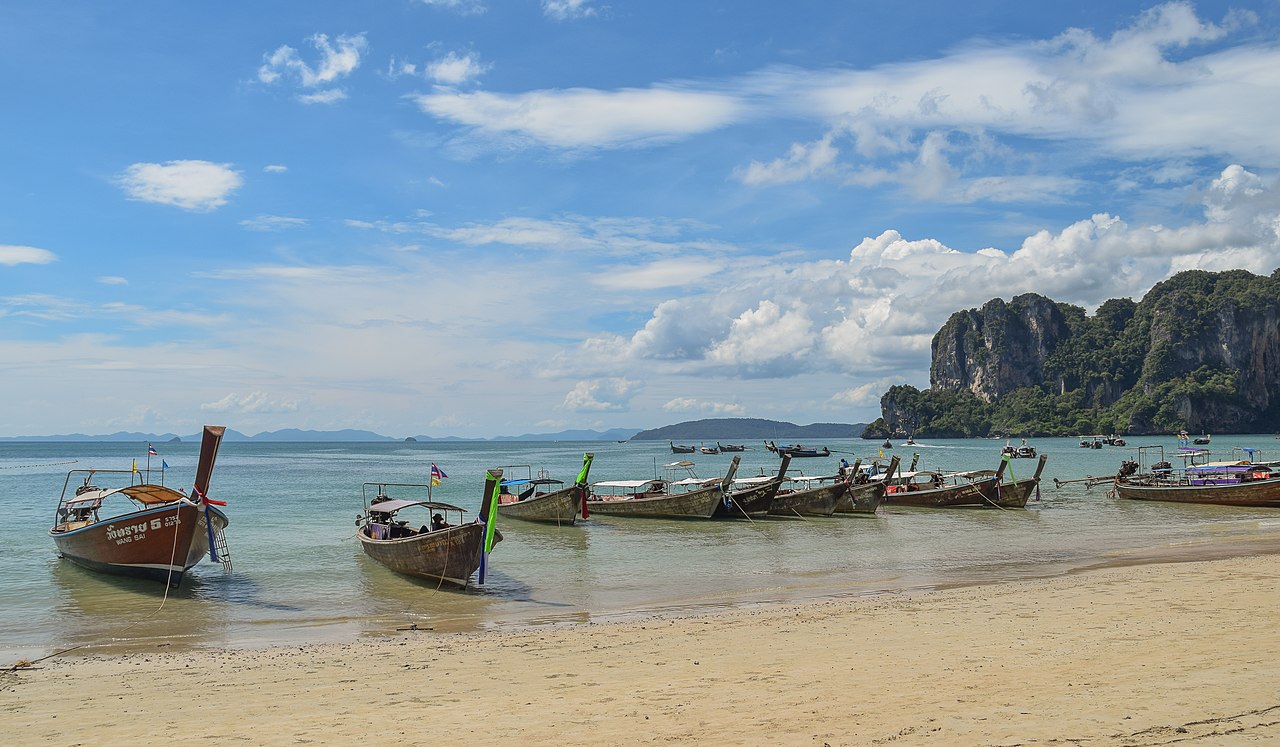
November to March is the best time for most of Thailand: dry, sunny and cooler. But the two coasts have opposite seasons. The Andaman coast (Phuket, Krabi, Phi Phi) is best November to April and wet May to October; the Gulf islands (Koh Samui, Phangan, Tao) are best January to August and wettest October to December. Avoid the north from late February to April, when smoke from crop burning fills the air.
Updated 6 November 2026
Thailand itineraries: 7, 10, 14 and 21 days that actually work
In 10 days, do Bangkok, Chiang Mai and one island area. In 14 days, add a second island or Khao Sok. A week is enough for Bangkok plus either the north or one island, not both. Pick the Andaman coast (Phuket, Krabi) from November to April and the Gulf islands (Samui, Phangan, Tao) from May to September.
Updated 6 November 2026
How much does a Thailand trip cost? Tours, budgets and a calculator
Doing it yourself, plan on about US$40 to 60 a day on a backpacker budget, US$90 to 150 mid range and US$250 or more for comfort, per person sharing. Group tours run about US$90 to 140 a day on 18 to 35 trips, US$140 to 220 on small group tours and US$300 or more for private or premium tours. Islands, peak season and internal flights push costs up.
Updated 6 November 2026
Which Thai island? The Andaman and Gulf islands compared
Choose your coast by month first: the Andaman side (Phuket, Krabi, Phi Phi, Lanta, Lipe) from November to April, the Gulf (Samui, Phangan, Tao) from January to August. Then choose by style: Phuket or Samui for easy flights and resorts, Krabi and Railay for limestone scenery, Phi Phi or Phangan for parties, Koh Lanta or Khao Lak for families, Koh Tao for diving, and Koh Lipe or Koh Yao Noi for quiet.
Updated 6 November 2026